What should you track after every poker session?
Track enough to explain the result later. “Won $600” is not a useful poker record by itself. Was it a soft 2/5 game? Did you play six hours or ninety minutes? Were you tilted, tired, stuck, or table-selecting well? The context is where the edge hides.
- Date and venue: where and when the session happened
- Format: cash, tournament, PLO, NLHE, mixed, private game, circuit stop
- Stakes and hours: required for real hourly
- Buy-in, cash-out, and net: the basic accounting layer
- Table quality: good game, bad seat, reg-heavy lineup, must-move weirdness
- Key hands: the decisions worth reviewing, not every boring check-fold
- Mental state: fatigue, tilt, focus, discipline, missed value
Most poker tracking fails because it asks for data when you are least willing to enter it.
The end of a live session is messy. You are tired, driving home, eating garbage at midnight, replaying one river decision like a lunatic. A good tracker has to fit that moment. If logging feels like accounting homework, you will skip it, and skipped sessions turn your database into fiction.
Fast capture beats perfect structure
Plain-English notes are better than empty rows. Get the session down first; structure can come after.
Context beats raw profit
Results matter, but table quality, decision quality, and mental state explain whether the result is repeatable.
Weekly review beats daily emotion
One session lies constantly. A week of sessions starts showing the real pattern.
Poker spreadsheet vs poker session tracker.
A spreadsheet is fine for simple profit tracking. It gets weaker when you need mobile logging, session notes, hand review, bankroll context, and weekly feedback. That is where a dedicated poker session tracker earns its keep.
| Need | Spreadsheet | Dedicated tracker |
|---|---|---|
| Profit and loss | Good enough | Good enough |
| Real hourly | Manual formulas | Built from hours + results |
| Mobile logging | Clunky after live sessions | Designed for quick capture |
| Session notes | Usually skipped or messy | Part of the workflow |
| Hand review connection | Disconnected | Can link hands to the session |
| Weekly performance review | You build it yourself | Should be part of the product loop |
Cash games, tournaments, and circuit stops need different notes.
A 2/5 cash session and a live circuit bullet are not the same animal. Do not flatten them into one “profit” column and call it analysis. Track the details that make each format explainable.
Cash games: stakes, hours, table quality, seat changes, lineup, reloads, fatigue, hourly.
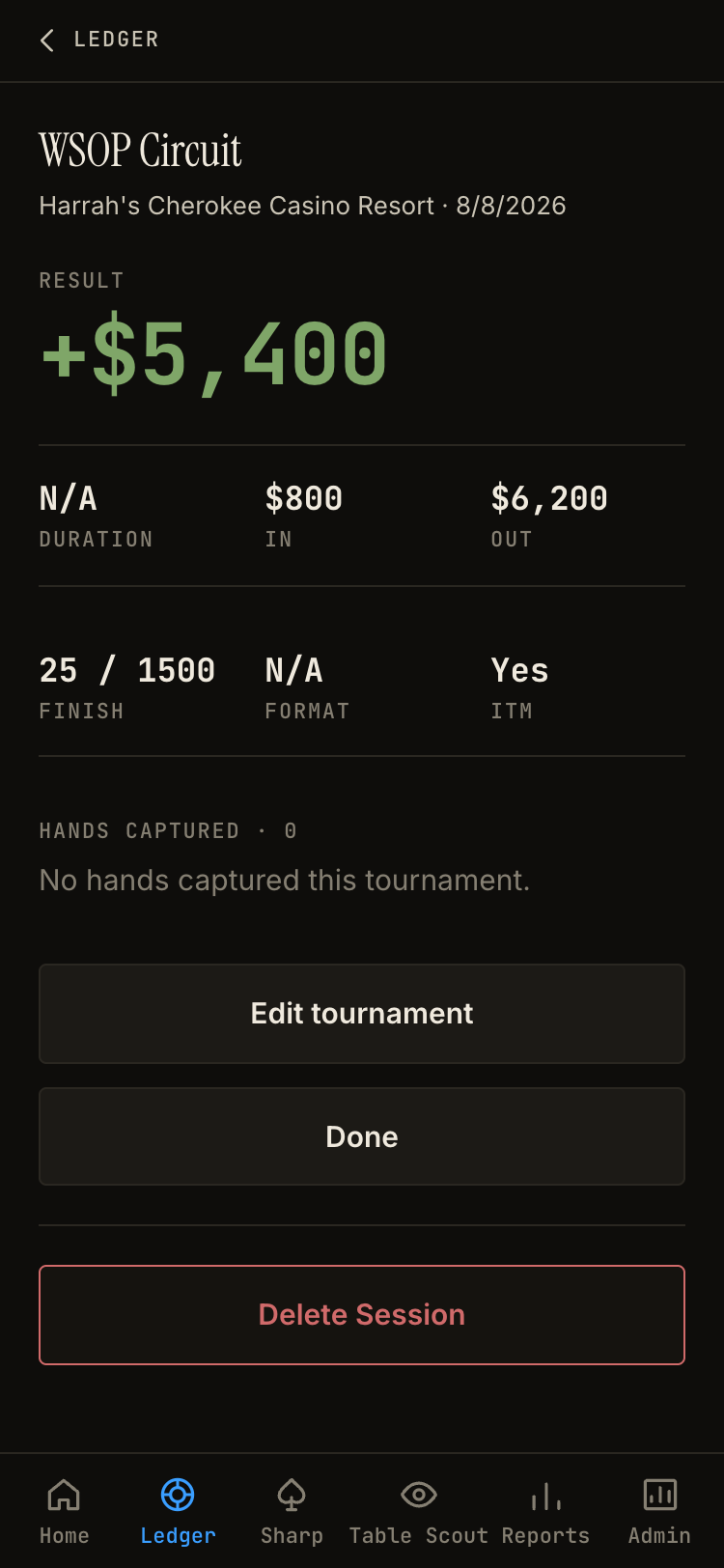
Tournaments: buy-ins, bullets, finish, cash, table draw, key bustout or double-up hands.
Circuit grinders: stop, venue, travel context, field quality, schedule decisions, bankroll pressure.
Where Ledger fits.
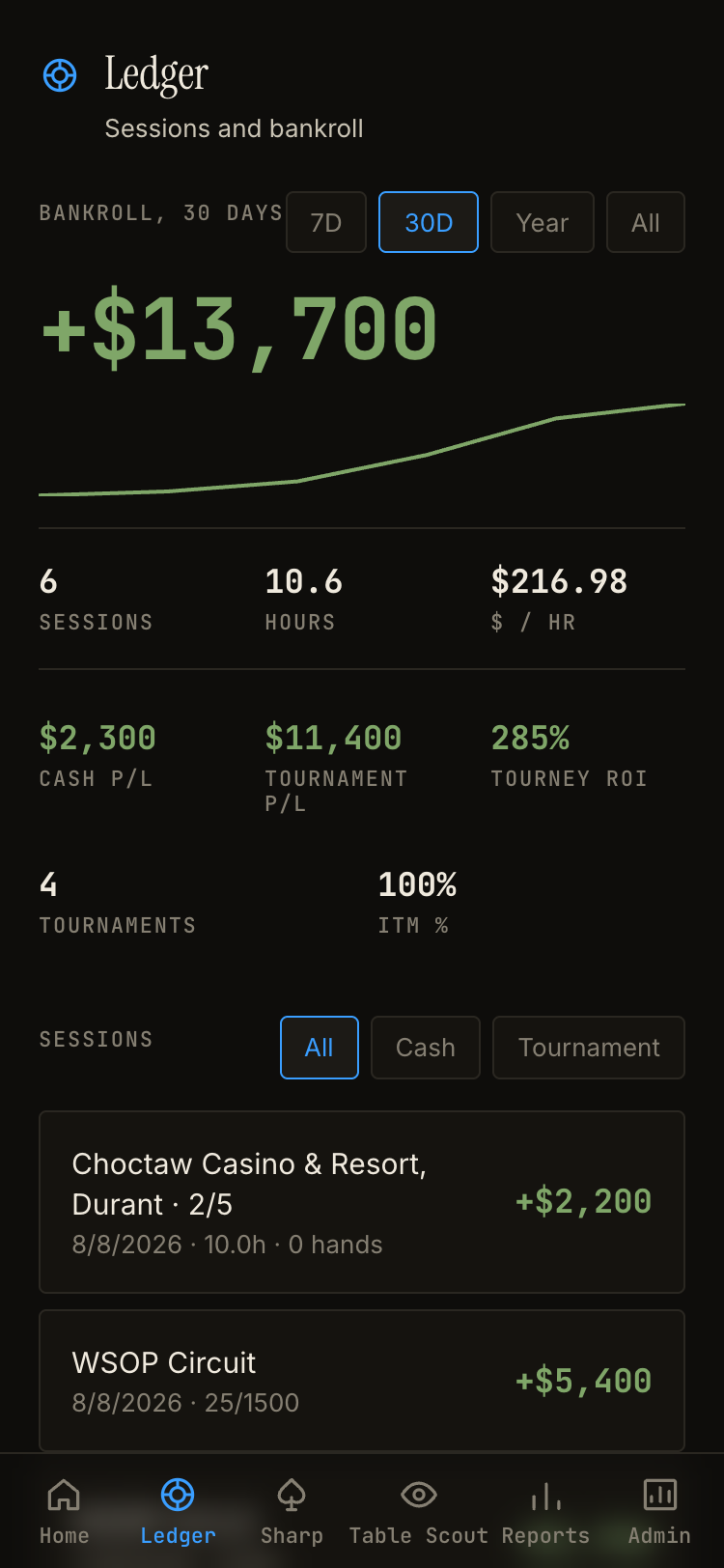
Ledger is Poker Agent AI’s free poker session tracker. It is built for live players who want to log sessions quickly in the web app at app.pokeragentai.com, keep bankroll and hourly visible, and turn volume into weekly review. This page is the guide; Ledger is the tool.
Text the session
Log results in plain English instead of fighting forms after a long session.
Track the pattern
See results, hours, venues, stakes, and performance context together.
Build the weekly loop
Use recurring reports to find leaks and decide what to study next.
Poker session tracker FAQ.
What is the best poker session tracker?
The best tracker is the one you will use consistently. For live players, that usually means fast mobile entry, bankroll and hourly tracking, notes, and a weekly review loop. Ledger is built around that workflow.
Should poker players track every session?
Yes. Skipping losing sessions or short sessions makes your data dishonest. Track every session, even if the note is simple.
Is a poker bankroll tracker the same as a session tracker?
Not quite. A bankroll tracker shows money movement. A session tracker should also capture hours, stakes, venue, game quality, decisions, and mental-game context.
Can I use a spreadsheet to track poker results?
Yes, especially at first. The problem is consistency and context. Spreadsheets are easy to abandon and usually do not connect results to hands, notes, or weekly review.
What is a good poker hourly rate?
It depends on stakes, format, location, and sample size. The important part is tracking hours honestly so your hourly is real instead of one heater wearing sunglasses indoors.
Does Ledger work for tournaments?
Yes. Ledger can be used to track tournament buy-ins, bullets, finishes, cashes, travel stops, and key hands, not just cash-game sessions.
Keep building the edge.
Session tracking is one layer. Poker Agent AI connects tracking, hand review, and opponent research into one operating system for serious players.
Ready to stop guessing?
Start Free Ledger, log your next poker session, and build the weekly review loop your spreadsheet never gave you.