Google is slow. The table is not.
You can spend thirty minutes searching scattered public poker pages. Or you can get the useful version before the first orbit eats you alive.
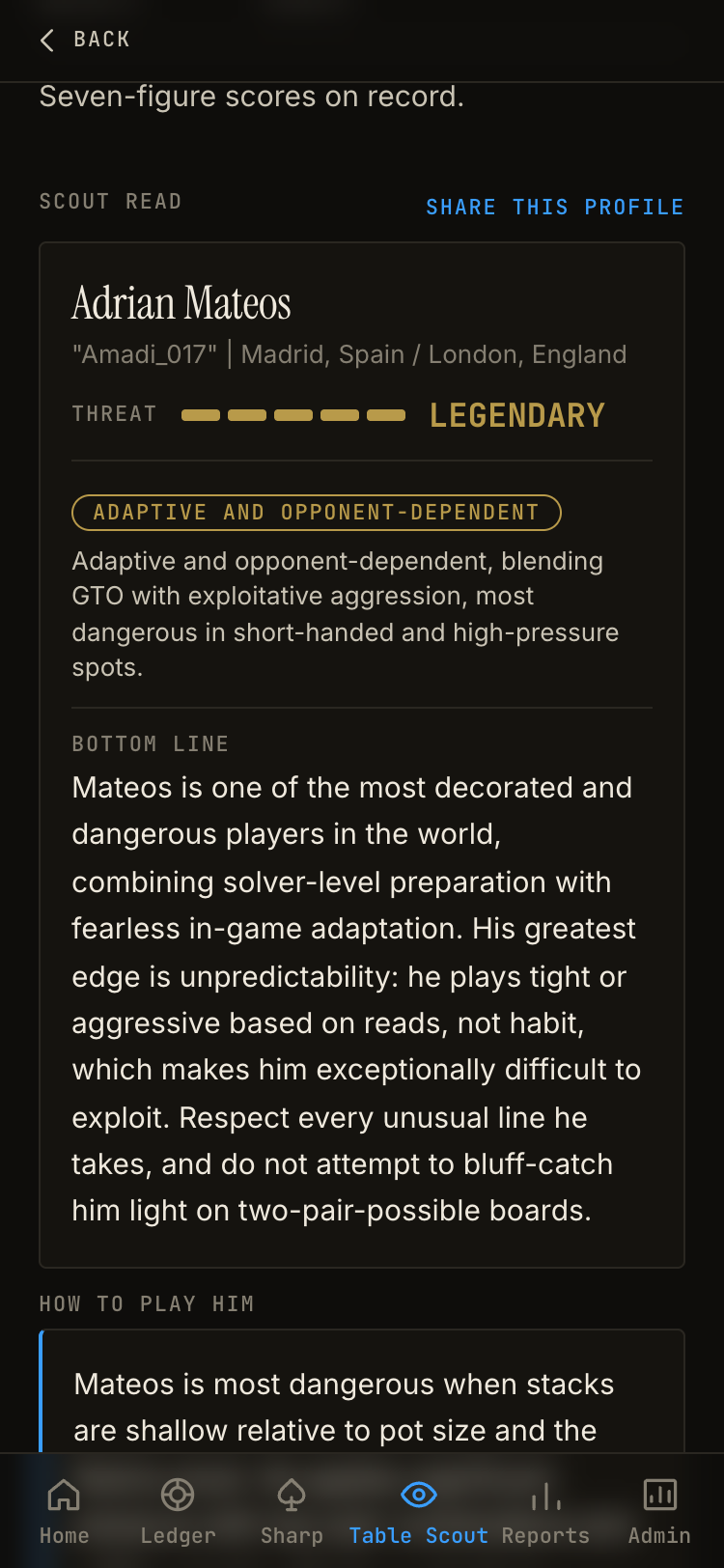
Public results
Tournament cashes, finishes, and earnings from publicly available records.
Player context
Event history, chip counts, and venue patterns turned into readable table context.
Seat-level reads
Lineup context, threat level, and practical counters.
Built around public information.
Table Scout is not private surveillance and it is not magic. It organizes public poker data into a faster workflow.
Public information
Publicly available poker records and event context only.
Actionable summary
Not trivia. What matters when the player is on your left?
Solo Scout
When one name matters most, pull the deeper file.
Where lookup fits in the loop.
Table Scout prepares you before the session. Sharp helps after the weird hand. Ledger tells you if preparation is actually improving results.
Poker player lookup for the names at your table. FAQ.
What is a poker player lookup?
A poker player lookup searches publicly available poker information such as tournament results, chip counts, event history, and player context.
Where does Table Scout data come from?
Table Scout organizes publicly available poker data such as published tournament results and live reporting.
Is this private data?
No. Poker Agent AI is built around publicly available poker information, not private or restricted data, and not unauthorized access.
How is this different from Googling a player?
The concept is similar, but Table Scout is faster and structured for poker decisions instead of generic search results.
Keep building the edge.
These pages are wired together because the product is wired together: prepare, improve, measure.
Poker Session Tracker
Ledger: track real results
RELATEDWeekly Poker Performance Report
Turn sessions into a review loop
RELATEDAI Poker Coach
Sharp: review hands and leaks
RELATEDPoker Hand History Analyzer
Break down hands street by street
RELATEDBest Poker Tracking Apps
Compare tools for live players
RELATEDHow to Review a Poker Session
Build the post-session habit
Start with the free tracker. Upgrade when the edge is obvious.
Ledger is the free entry point: log sessions, get the weekly review habit, then add Table Scout when opponent research becomes part of your routine.